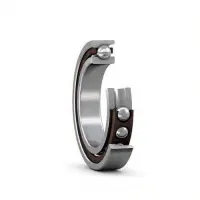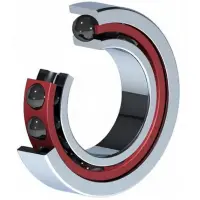
71828 CDGB/P4
71800 Series Super Precision Angular Contact Ball Bearings
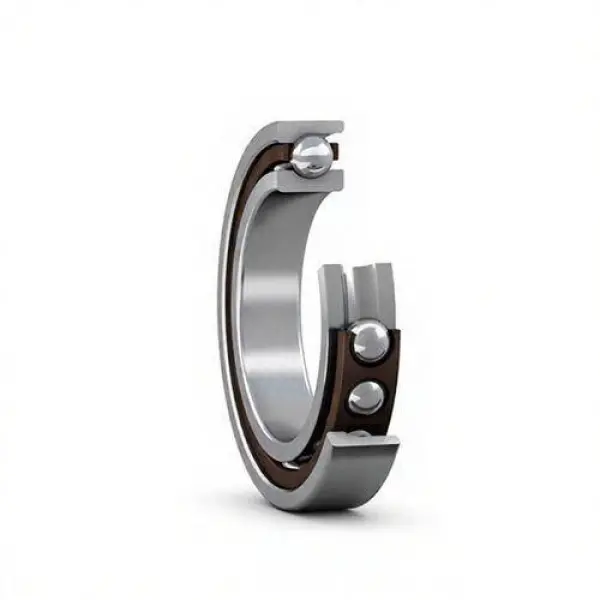

Image may differ from product. See technical specification for details.
Basic Information
Main Dimensions
Ball & Washer Dimensions
Performance
Materials
- Fast delivery
- Enjoy discounts on bulk purchases
- Secure Payment
- Fast Global Shipping
71828 CDGB/P4 Bearing Product Overview & Core Advantages
The 71828 CDGB/P4 is a single-row angular contact ball bearing engineered for high-precision applications requiring exceptional rotational accuracy and rigidity. Operating under the stringent P4 tolerance class, this bearing is designed to handle combined loads, efficiently supporting both radial loads and substantial axial loads in one direction. Its light preload (Class B) minimizes deflection under operational stresses, ensuring stable performance in demanding environments. Manufactured from high-grade chrome steel and featuring a phenolic resin cage, it delivers reliable operation at high speeds (up to 11,000 rpm) while maintaining dimensional stability across a wide temperature range (-30°C to 110°C). As a universally matchable (SU) bearing, it can be paired with another identical bearing to form a precisely matched set, offering design flexibility for complex arrangements requiring preload or increased rigidity.
71828 CDGB/P4 Bearing Model Code Explained, Specifications & Naming Convention
| Code Segment | Technical Meaning |
|---|---|
| 71828 | Basic bearing designation, indicating a metric, single-row angular contact ball bearing with a 140 mm bore, 175 mm OD, and 18 mm width. |
| CD | Signifies a 15° contact angle and that the bearing is universally matchable (SU). When two CD-designated bearings are paired, they can be arranged in various configurations (back-to-back, face-to-face, or tandem) to achieve specific preload and rigidity characteristics. |
| GB | Indicates a light preload (Class B). This preload eliminates internal clearance, enhancing system rigidity and reducing vibration and noise under high-speed operation. |
| P4 | Denotes the tolerance class. P4 represents very high precision, with extremely tight tolerances on bore diameter, outside diameter, and width, making it suitable for applications demanding exceptional running accuracy. |
71828 CDGB/P4 Bearing Structural Features & Performance Benefits
- High Rigidity and Precision: The combination of a 15° contact angle and factory-applied light preload (Class B) provides superior system stiffness, minimizing axial and radial play. This is critical for applications requiring high positional accuracy and resistance to operational deflection.
- Superior Load Capacity: Engineered as an angular contact bearing, it is optimized to carry significant combined loads (simultaneous radial and axial loads). The high dynamic (10,102 lbf) and static (13,950 lbf) load ratings ensure long service life under demanding conditions.
- Optimized High-Speed Performance: The lightweight and robust phenolic resin cage ensures stable guidance of the 35 precision balls at high rotational speeds, contributing to the high limiting speed of 11,000 rpm. The open design facilitates efficient lubrication and heat dissipation.
- Precision Engineering: Conforming to P4 tolerance class, this bearing features extremely tight dimensional tolerances and running accuracy, resulting in smooth, quiet operation with minimal vibration, which is essential for precision machinery.
71828 CDGB/P4 Bearing Typical Application Areas
The 71828 CDGB/P4 is ideally suited for high-precision, high-speed rotational systems across various industries, including:
- Machine Tool Spindles: For high-speed milling, grinding, and turning centers where precision, rigidity, and speed are paramount.
- Precision Gearboxes and Transmission Systems: In applications requiring accurate shaft positioning and high load capacity.
- High-Frequency Motors and Spindles: Used in electric motors and motorized spindles that operate at very high rotational speeds.
- Medical and Laboratory Equipment: In centrifuges, scanners, and other devices demanding quiet, vibration-free, and reliable operation.
- Aerospace and Defense Systems: For guidance systems, actuators, and other critical components where failure is not an option.